
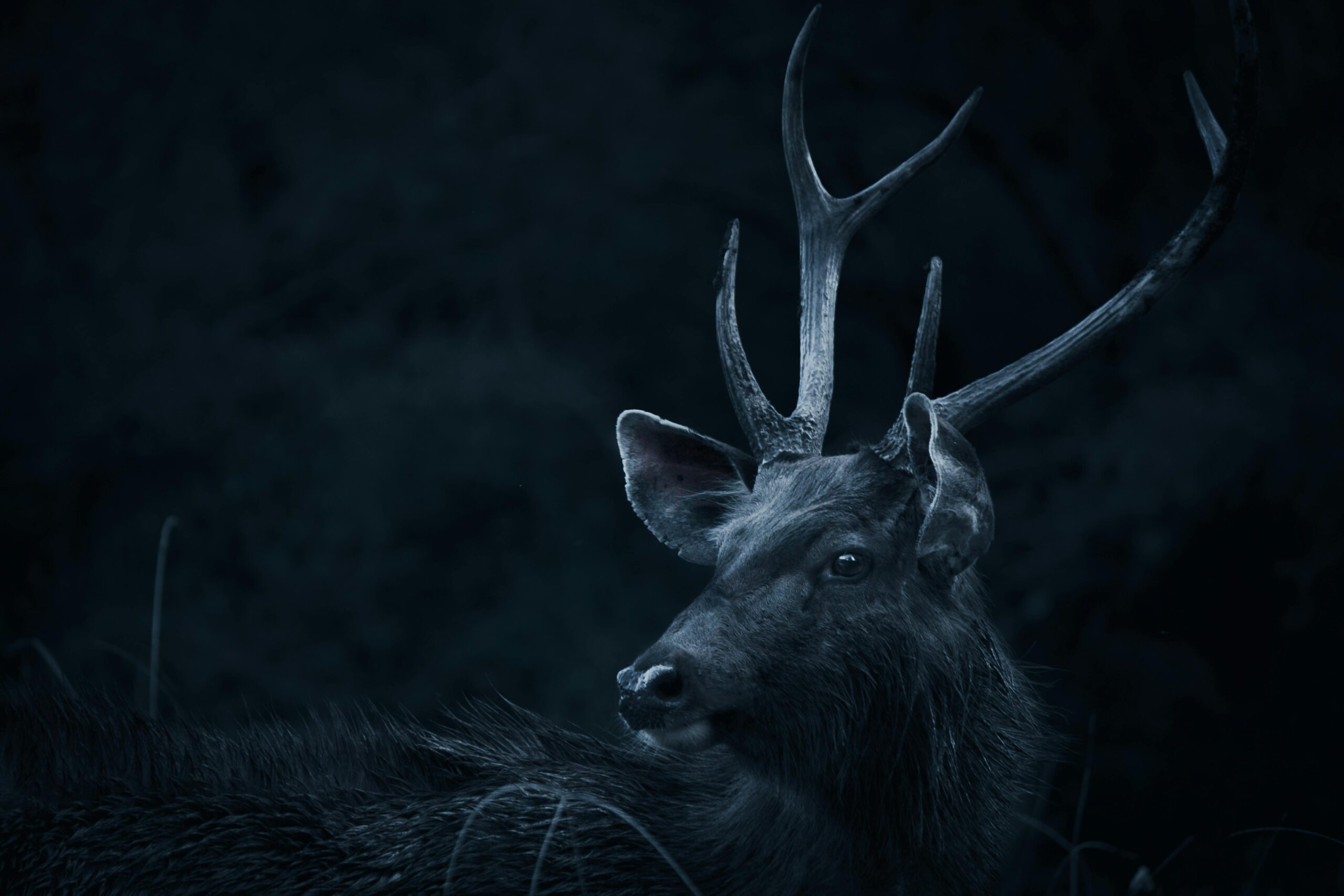
Gentle Spirits, Shadowed Omens, and the Call to Follow
In the hush of the forest, just as the mist begins to lift, a flicker of movement draws your eye. A deer—still, watchful, and half-vanished between the trees—locks eyes with you, then turns and disappears down an unseen path. And you’re left with the question: was that just a deer… or something more?
In folklore across the British Isles and beyond, deer are far more than quiet woodland creatures. They are messengers, guides, and sometimes shape-shifters—beings who cross between the wild and the otherworld, and who often appear just when you’re about to cross a threshold of your own.
Today, we explore the deep and mysterious symbolism of the deer in woodland lore—and how to know when this gentle creature is calling you to follow.
🌲 The Deer in British and Celtic Folklore
Across Celtic myth and early British folklore, the deer was considered a sacred and elusive being, often linked to:
- The fae realm (especially white deer or stags)
- Transformation and initiation
- Messages from the ancestors or spirit world
- The divine feminine and sovereignty
Deer are liminal creatures—they live between the forest edge and the deep woods, between tame and wild, and between seen and unseen.
🦌 The White Hart and the Wild Hunt
One of the most iconic figures in British folklore is the White Hart—a glowing, elusive stag said to appear:
- At moments of great destiny or decision
- To kings and knights before a quest
- As a harbinger of change or an invitation to seek something lost
To follow the White Hart is to accept a spiritual challenge—to leave the known path and journey into the wild within.
In contrast, deer are also tied to the Wild Hunt, where spectral hounds and riders chase across the sky. In this context, the deer may be the pursued—or a symbol of the soul being called home.
🌿 Doe and Fawn: Feminine Magic and the Hidden Path
While the stag is often seen as a herald of action and transformation, the doe represents:
- Subtle intuition
- Quiet strength
- The unseen road taken without noise or need for glory
In many tales, the appearance of a mother deer or fawn is a sign to slow down, watch more carefully, or nurture your softer self.
Seeing a doe with a fawn in spring or midsummer was believed to be a blessing, a symbol of good fortune and fertility.
🧚♀️ Deer and the Fae
In faerie folklore, deer are sometimes seen as:
- Fae in animal form
- Guides to the Otherworld
- Or even enchanted humans under a spell
To follow a deer off the path may lead you to a hidden glade, a fairy ring, or a place where time slips away. But be warned—you may not return unchanged.
In some Scottish stories, a white deer lures hunters or wanderers into the woods—and they are never seen again.
🔮 Deer as a Personal Messenger
If a deer keeps showing up in your life (in dreams, visions, or real-world sightings), ask:
- Am I being called to shift direction or take a new path?
- What threshold am I about to cross?
- Where do I need to move more gently, or act with quiet wisdom?
A deer may come as a blessing, a mirror, or a subtle warning—but always with grace.
🕯️ Ritual: The Deer’s Path – A Quiet Invitation
This gentle spell invites a deer spirit into your space to bring guidance, peace, or insight.
You’ll need:
- A white or brown candle
- A feather or leaf
- A quiet space by a window or tree
Steps:
- Light the candle. Hold the feather or leaf in your palm.
- Close your eyes and say:
“Walker of dusk, hooved and bright—
Whisper truth by day or night.
Let me see what must be known,
Guide my step where light has flown.” - Sit in silence. Watch your thoughts. You may receive a symbol or image—write it down.
- Place the leaf under your pillow for dream messages, or leave it as an offering near a tree.
🧭 Want to Know More?
- Coming soon: “Forest Spirits & Animal Signs” illustrated guidebook
- Visit the Haunted Wishes shop for stag and doe charms, fae path spell kits, and seasonal ritual candles
- Don’t miss July 17’s post: “Birdsong and Omens: Which Calls Were Seen as Prophecy?”
✨ The deer does not demand your attention. It asks you to notice. To listen. To step softly, speak less, and move with grace. Follow—and find what waits beyond the trees.