
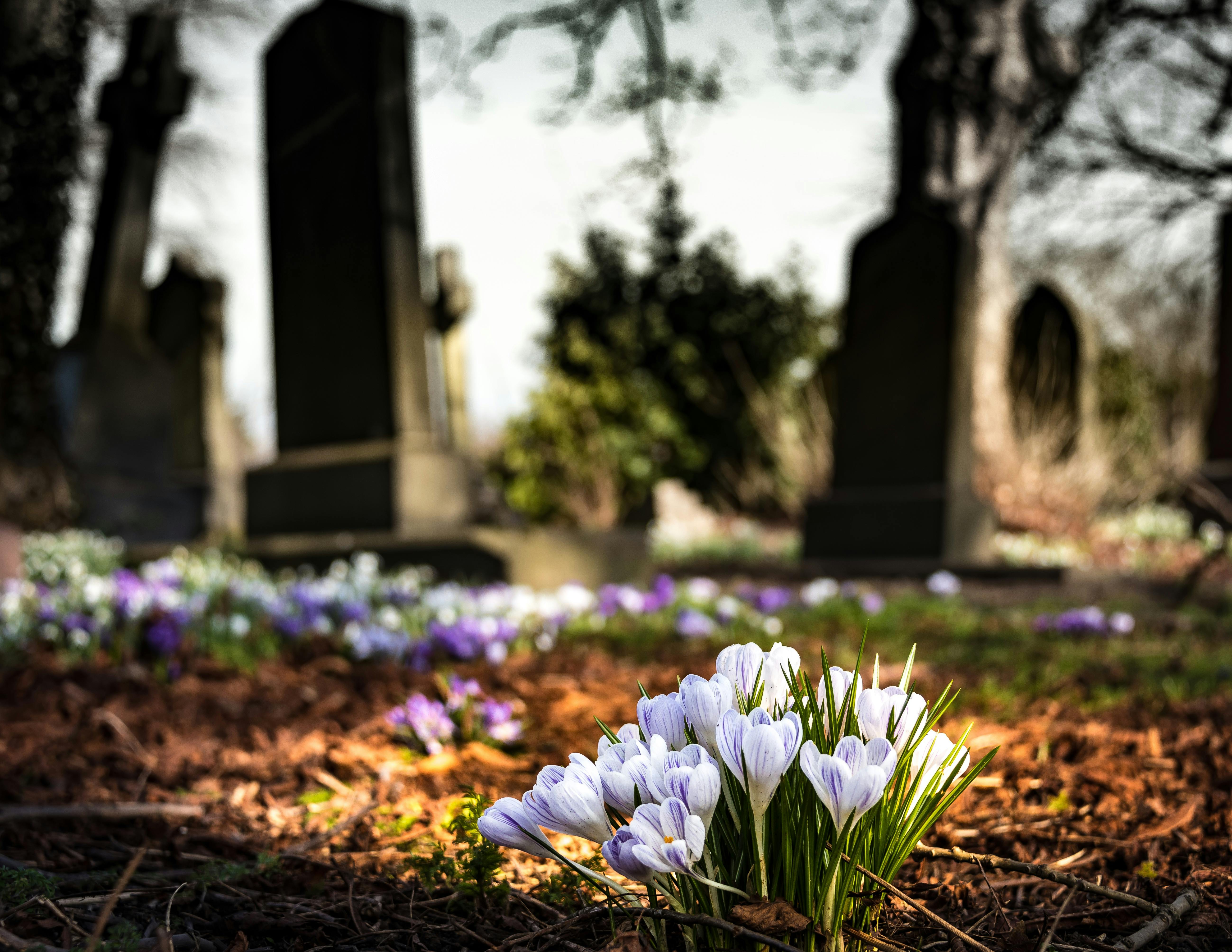
Botanical Folklore from Tombstones to Twilight
Graveyards aren’t just resting places for the dead—they’re gardens of myth, memory, and magic. Walk through any old cemetery in the UK and you’ll find more than worn stone and moss-covered names. You’ll find plants and flowers steeped in folklore, each chosen—or left to grow—for reasons older than we often realise.
From protective herbs to mournful blooms, today we’re digging into the tradition of graveyard gardening, and the plants once believed to guide the dead, ward off spirits, or speak for the living.
🌿 Why Plants Were Planted in Graveyards
Long before manicured lawns and granite rows, burial grounds were wild, sacred spaces. People planted specific flowers and herbs not just for beauty, but to:
- Protect the soul in transition
- Ward off evil spirits or grave robbers
- Soothe grieving loved ones
- Mark a grave with symbolic meaning
Some plants were believed to absorb the essence of the dead, becoming living connections between this world and the next.
🪦 Five Folkloric Plants of the Grave
🌼 1. Yew (Taxus baccata)
The tree of death and rebirth
Almost every churchyard in Britain has at least one ancient yew tree. Sacred to Druids and later adopted by Christians, yews represent eternal life. Their toxic leaves were thought to keep spirits bound to their graves, and the tree’s evergreen nature symbolised the soul’s endurance.
Folklore: Never cut a yew branch from a churchyard—it’s said to bring death into your home.
🕯️ 2. Rosemary (Rosmarinus officinalis)
For remembrance and the soul’s journey
Often planted at the head or foot of a grave, rosemary was used in funerals for centuries. Mourners would carry sprigs, burning them or casting them into the grave.
Folklore: Rosemary strengthens memory. It was also believed to protect the soul’s passage and repel evil spirits.
🌼 3. Lily (Lilium)
Purity, transition, and divine sleep
The white lily became a Victorian favourite for graves and mourning bouquets, symbolising the soul’s peaceful rest. In earlier times, it was believed to help guide young souls safely into the afterlife.
Folklore: Planting lilies near a grave was thought to ensure sweet dreams for the dead.
🍃 4. Rue (Ruta graveolens)
The herb of grace and grave protection
Rue was used for cleansing rituals and planted near graves to ward off the evil eye. Its strong, bitter scent was believed to drive away malicious spirits and prevent restless dead from rising.
Folklore: Rue should never be stepped on after dark, or the spirit it’s guarding may mistake you for a threat.
🌸 5. Foxglove (Digitalis purpurea)
Poison, portals, and faerie crossroads
Often growing wild in old cemeteries, foxglove is associated with the fae and liminal places. Its bell-like flowers were called “witches’ thimbles” or “dead man’s bells.”
Folklore: Planting foxglove was said to keep faeries from stealing souls. Others believed the flowers marked spots where the Otherworld leaked through.
🌕 Graveyard Gardening Today
If you want to create a garden of remembrance at home or build a witch’s altar garden, these plants are powerful choices. Use them to:
- Honour ancestors or loved ones
- Create a protective perimeter around your space
- Connect with the spirit realm through meditation or ritual
Just be mindful—some plants like yew and foxglove are toxic. Always research before handling or planting.
🌿 A Simple Graveyard Garden Ritual
Try this quiet act of remembrance at twilight:
- Light a white or black candle.
- Place a sprig of rosemary and a flower (real or dried) beside it.
- Whisper the name of someone you wish to honour.
- Say:
“Through root and bloom, I remember thee.
May peace surround your memory.” - Leave the herbs at a grave, garden, or natural spot sacred to you.
🧭 Want to Know More?
- Coming soon: our “Witch’s Graveyard Garden” Zine with lore, layouts, and ritual ideas.
- Explore the Haunted Wishes shop for botanical prints, herbal charms, and plant-based spell kits.
- Keep an eye out for June 25’s post: “How to Create an Ancestral Altar” — the perfect companion to today’s theme.
🖤 In the garden of the dead, every leaf tells a story. Some mourn. Some protect. And some whisper secrets only the living can hear.